About The Summer Book
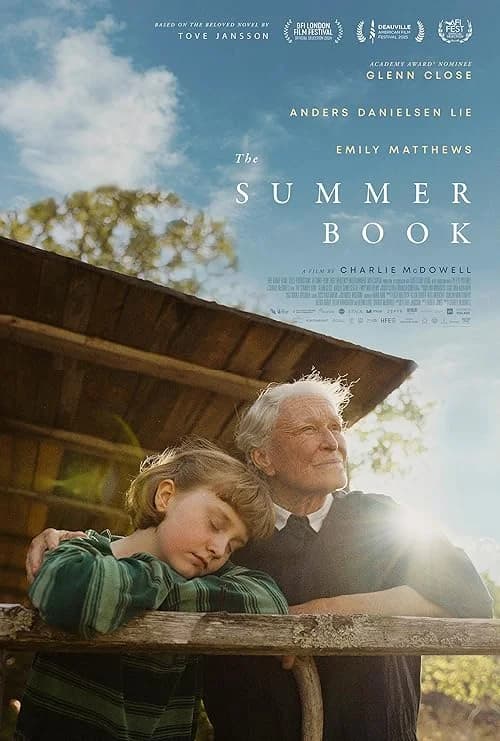
The Summer Book (2024) is a tender, atmospheric drama that explores grief, memory, and the quiet bonds that form in the wake of loss. Directed with delicate precision, the film follows young Sophia (Emily Matthews) as she spends a transformative summer on a remote Finnish island with her emotionally distant father (Anders Danielsen Lie) and her grandmother (Glenn Close), following the death of Sophia's mother. The island's stark, beautiful landscape becomes a character in itself—a place of isolation that gradually becomes a sanctuary for healing.
Glenn Close delivers a masterfully restrained performance as the grandmother, whose own aging process and wisdom provide a gentle counterpoint to Sophia's youthful sorrow. Emily Matthews is a revelation, portraying childhood grief with an authenticity that avoids sentimentality. The film's pacing is deliberately slow, mirroring the rhythm of island life and allowing the emotional weight of scenes to settle naturally.
What makes The Summer Book particularly compelling is its refusal to offer easy answers about grief. Instead, it presents healing as a series of small moments—a shared discovery on the shoreline, a quiet conversation in the island's rustic cabin. The cinematography captures the Nordic summer's ethereal light, creating a visual tone poem that complements the narrative's emotional depth.
Viewers seeking a thoughtful, character-driven drama will find much to appreciate here. It's a film that rewards patience, offering a moving portrait of how families can reconnect through shared silence and the natural world. The Summer Book is ultimately a testament to resilience and the subtle ways love endures, making it a worthwhile watch for anyone who values cinematic storytelling about the human condition.
Glenn Close delivers a masterfully restrained performance as the grandmother, whose own aging process and wisdom provide a gentle counterpoint to Sophia's youthful sorrow. Emily Matthews is a revelation, portraying childhood grief with an authenticity that avoids sentimentality. The film's pacing is deliberately slow, mirroring the rhythm of island life and allowing the emotional weight of scenes to settle naturally.
What makes The Summer Book particularly compelling is its refusal to offer easy answers about grief. Instead, it presents healing as a series of small moments—a shared discovery on the shoreline, a quiet conversation in the island's rustic cabin. The cinematography captures the Nordic summer's ethereal light, creating a visual tone poem that complements the narrative's emotional depth.
Viewers seeking a thoughtful, character-driven drama will find much to appreciate here. It's a film that rewards patience, offering a moving portrait of how families can reconnect through shared silence and the natural world. The Summer Book is ultimately a testament to resilience and the subtle ways love endures, making it a worthwhile watch for anyone who values cinematic storytelling about the human condition.